How to Heat Thick Glass Without Breaking It
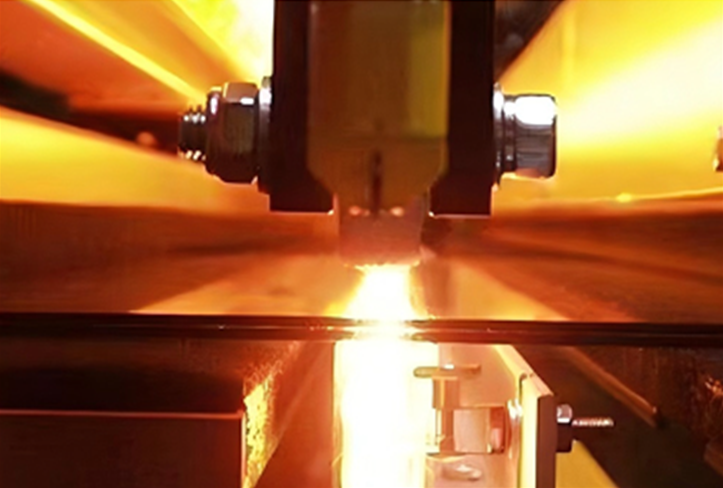
Cutting thick glass is a bit of a tightrope walk. You need it hot, but if you rush the process or heat the surface too aggressively, the inside of the glass can’t keep up. That tension builds up, and—snap—you’ve got a crack. To stop that from happening, we use short-wave infrared (IR) lamps. The beauty of these lamps is how quickly you can tweak the power. It gives you total control, so you can nudge the glass up to the right temperature without accidentally hitting that “thermal shock” breaking point.
Why IR Lamps Actually Work
Here is the secret: IR lamps have very low thermal mass. If you’ve ever used resistive heating elements, you know they hold onto heat long after you turn them off. IR lamps aren’t like that. They react almost instantly. When your controller tells the power to drop, the heat stops right then and there. This lets you “soak” the glass. You can bring it up to a comfortable baseline temperature first, let it settle, and then push it to the final cutting temp. Since we’re dealing with thick glass, we usually go for high-wattage tubes. You need that raw power to actually penetrate the material. But a word of warning: you’ll want a fast-acting SCR (Silicon Controlled Rectifier). Without one, it’s way too easy to overshoot your target temperature and ruin your piece.
The Gear Under the Hood
We stick with quartz-halogen tech for these preheaters. The quartz shell can take the heat, and the halogen cycle keeps the filament from burning out too quickly. It just lasts longer. For the wiring, we use R7s or Sk15 connectors. They’re standard parts, which is great because anyone can swap them out during maintenance without needing a specialized degree. Sometimes, we use coated quartz. This shifts the light spectrum so the heat sinks deeper into the glass. It prevents that annoying problem where the surface gets scorched while the middle stays cold.
The Trade-offs
Nothing is perfect. Pumping that much power into IR lamps puts a real strain on your electrical panels. If you’re running a bank of 2000W tubes, make sure your wiring can actually handle the peak current. And then there’s the heat. These things gethot. If you don’t have active cooling or some solid heat shielding, your lamp sockets will eventually just melt. It’s worth spending the extra time on the housing now so you aren’t replacing melted plastic later.