Dealing with the Stress of Glass Annealing
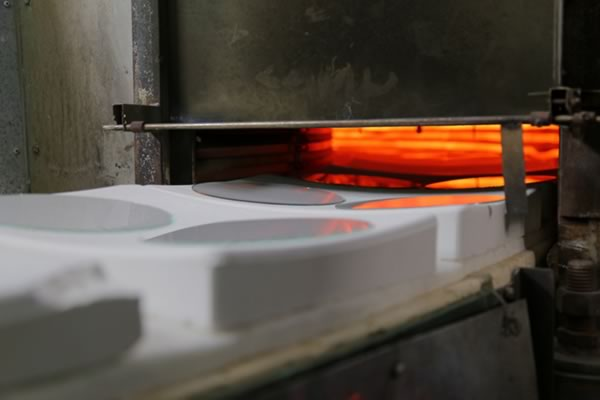
When you cut and shape glass bottles, you’re basically trapping a lot of tension inside the material. If you just leave it alone, that stress builds up until the bottle decides to shatter on its own. Not exactly what you want. To fix this, you have to cool the glass down carefully. Now, you could use a standard oven, but those are slow. Like, really slow. If you’re running a continuous line, you can’t afford to wait around. That’s where shortwave infrared (SWIR) lamps come in. Instead of just warming the air, these lamps shoot high-energy photons straight through the surface. It heats the glass from the inside out.
Why speed is everything
On a fast-moving production line, every second counts. You don’t have time to wait for a heating element to slowly warm up. Shortwave lamps hit full power almost instantly. This is a huge win because it lets you use “zoning.” You can hit a specific stress point on the bottle with intense heat and then drop the temperature the moment it moves an inch forward. If your heater lags, you get uneven heat. And uneven heat means your bottles end up in the scrap bin.
The trade-off: Power vs. Hardware
To keep the conveyor belt moving without slowing down, you need a lot of wattage. But here’s the thing: that kind of heat is brutal on the equipment. The lamp housing takes a beating. That’s why you need quartz glass envelopes—they can handle the thermal shock without cracking. You also want your reflectors polished to a mirror finish. Every single watt needs to hit the bottle, not the wall. And a quick heads-up on the electronics. If you crank up the voltage to push more bottles through, make sure your electrical panels and cooling fans can actually handle the load. If the lamp overheats, it’ll burn out way sooner than it should.
Keeping the line moving
Switching to IR lamps basically kills the bottleneck. You stop thinking in “batches” where you have to stop, heat, and wait. Instead, it’s just a steady flow. Everything just… moves. It takes the whole operation from feeling like a DIY project to a professional, non-stop production stream.