

On the line, the flash-off zone is where the day gets real. Paint goes down, and the solvents have to leave—fast—before the next coat, before bending, before the tempering furnace. When flash-off falls short, you pay for it later: solvent entrapment, haze, and adhesion issues that show up as blisters and delamination. If heating is uneven, you drive thermal stress into the sheet, and the breaker pile grows. We built this zone for glass paint around one clear goal: pull solvents out quickly, evenly, and consistently—without messing up the coating surface or the glass itself. This isn’t a warm-air box. It’s a tuned thermal step that fits right into tempering, bending, coating drying, lamination, and insulating glass lines.
What actually matters under the hood
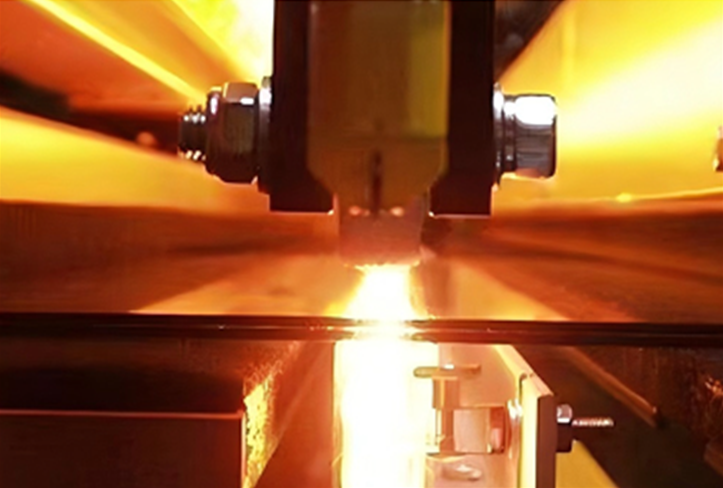
The flash-off zone for glass paint leans on short-wave infrared (SWIR) emitters matched to how solvents and thin films absorb energy. Quartz envelopes keep output stable in a shop where dust, humidity, and quench air are just part of the shift. The emitters respond fast—full power in seconds—so the zone keeps up with line speed without overshooting. The engineering follows the physics of glass and coatings:
- **Spectral control.**SWIR concentrates energy where solvents absorb, evaporating them without overheating the surface and causing the coating to skin over. That means fewer pinholes and less orange peel.
- **Uniformity by design.**Reflectors and zone layout create a controlled thermal field across the width. You get consistent solvent removal edge to edge, so cure is even and stress stays low.
- **Fast ramp, tight profile.**The system hits the required flash temperature quickly and holds it in a narrow band. That stability protects the glass from thermal shock and keeps the coating inside its curing window.
- **Installation fit.**The module is built for retrofit and integration—standard voltage options, defined mounting centers, and connectors that match common machine footprints. It drops into existing lines with minimal rework.
- **Energy and uptime.**High emitter efficiency plus smart dwell control cuts kWh per square meter. The quartz build holds output over long runs, so you’re not swapping lamps every weekend. The payoff is practical: rapid heat-up keeps pace with line speed, and stable temperature control prevents the spikes that cause solvent boil and cratering. In real terms, you see fewer rework sheets and more consistent optical quality.
Why this works where glass gets made
Flash-off has to fit the way plants actually run—meaning it plays along with multiple thermal processes, each with its own temperature behavior and tolerance.
- **Tempering lines.**Tempering demands fast heating and controlled quenching. Flash-off sits upstream, clearing solvents before the glass hits the furnace. Because the heating is rapid and uniform, you don’t introduce thermal stress that could show up as breakage in the quench.
- **Bending lines.**Bending needs a predictable temperature profile to form the glass. If solvents aren’t fully removed before forming, they outgas during the bend, leaving defects and driving scrap. Flash-off takes solvents out early, so the bending cycle stays stable and repeatable.
- **Coating drying and curing.**For low-E and other coatings, the drying stage sets the foundation for film integrity. SWIR drives solvents out without overheating the film surface, giving you a smoother finish and fewer micro-defects that can hurt durability and clarity.
- **Lamination (EVA/SGP/PVB).**Lamination relies on uniform heat to activate the interlayer and drive out trapped air. Any residual solvent from paint or edge treatments can interfere with adhesion and cause bubbles. Flash-off removes those solvents before the autoclave or vacuum cycle, cutting rejects and keeping throughput up.
- **Insulating glass (IG) sealing.**IG seals are sensitive to contamination. If solvents remain on the edge during desiccant activation and sealing, adhesion and gasket integrity can suffer. Flash-off ensures the edge is clean and dry, supporting a reliable seal and long-term weather resistance.
- **Automotive glass processing.**Automotive lines run at high speed with tight tolerances. The flash-off zone keeps pace, removing solvents between coating steps and before forming and lamination, so paint cures without disrupting downstream operations. What you end up with is straightforward: shorter dwell between coats, fewer defects that force rework, and less scrap from thermal stress. Energy use drops because heating is on only when needed and the profile is controlled. Reliability improves because the system is built for the environment—heat, vibration, and long shifts.
The shop-floor notes that make it work
Flash-off is only as good as its fit and how disciplined the operation is. Here are the practical details that matter when the machine is running.
- **Match line speed to temperature.**If speed increases without adjusting zone temperature, you risk under-flashing. If temperature climbs without speed adjustment, you risk skinning the coating and stressing the glass. Set the profile, then lock it in.
- **Clearance and airflow matter.**The module needs the right standoff distance to achieve uniformity. Keep airflow across the glass controlled and directed—turbulence causes uneven evaporation and streaks.
- **Plan the integration.**The module interfaces cleanly with common PLC and temperature control systems, but integration still needs planning. Confirm voltage, control signals, and safety interlocks during installation.
- **Maintenance is predictable.**Quartz emitters and reflectors need scheduled checks. Build in lamp inspection, reflector cleaning, and thermal sensor calibration at intervals that fit your shift pattern. That keeps output stable and prevents drift.
- **Respect the power draw.**The system is efficient because it heats the coating directly and responds quickly, but peak power is still significant. Make sure the electrical supply and wiring can handle the load, especially on high-speed lines where the zone runs at full power. If you’re running glass paint, flash-off isn’t a nice-to-have. It’s the step that decides whether the coating cures clean—or fails in the field. Set it up right, and it keeps pace with the rest of the line—tempering, bending, lamination, and sealing—without adding scrap and without slowing the schedule.